

The Five Capacities AI Works Better With
These five build on each other. Each one starts with a question you can ask yourself, and each one widens the circle, from what's happening inside you to what you create with other people.
Alongside each, a plain look at the evidence: what's well established and what's still emerging.
Why these matter more now
AI can draft the memo, summarize the meeting and suggest the reply. When that work gets cheap, what becomes scarce is the part only a person can do: knowing what's going on inside you, catching yourself before you react, seeing your own part, really hearing someone, and building a team where people tell the truth.
These aren't things AI does badly today and might do better next year. They can't be handed over at all, because each one needs a self, a relationship, or people in a room together.
An honest note: the research under each capacity shows that it matters. That AI makes it matter more is my argument, drawn from decades of this work and from early research on what happens when we hand our thinking to machines. I'll keep telling you which is which.
Under each one, you'll see how strong the research is. Some of these have decades of studies behind them. Others are newer and still being tested.
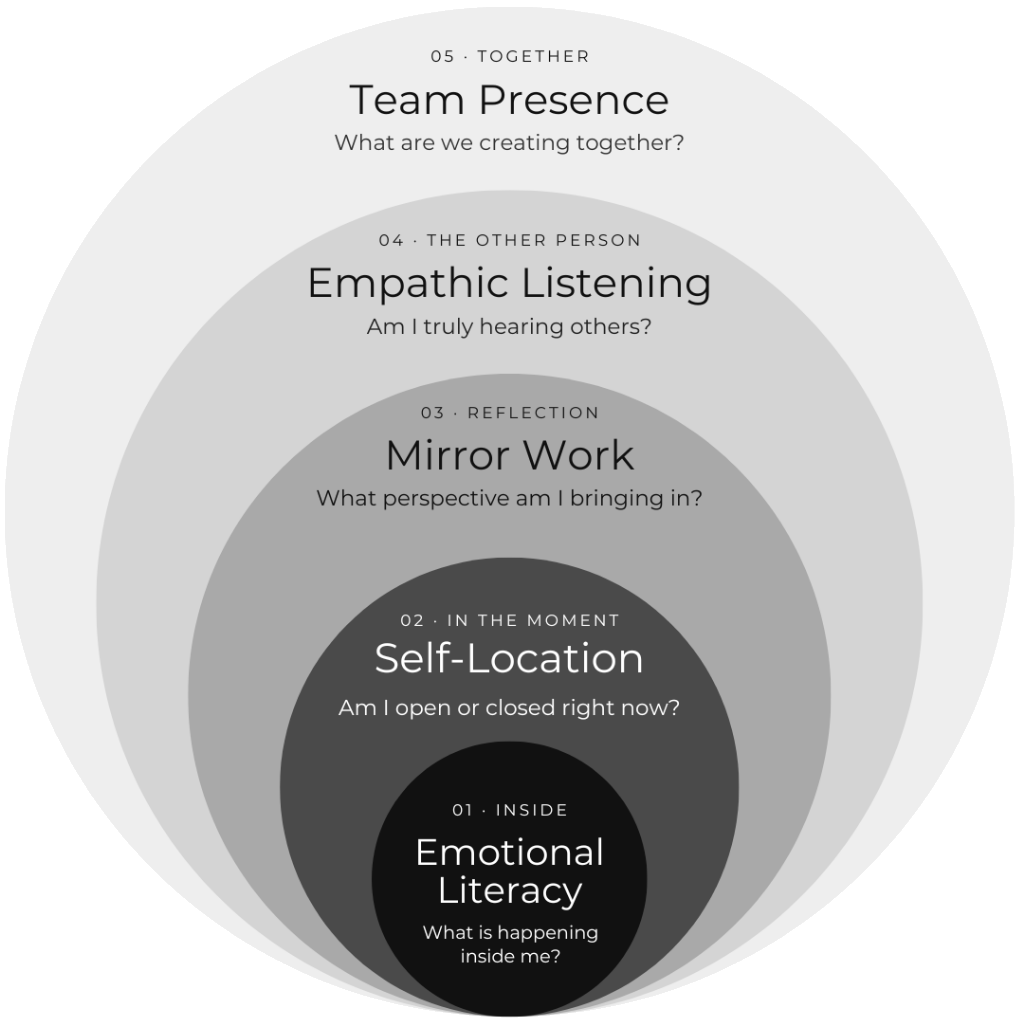
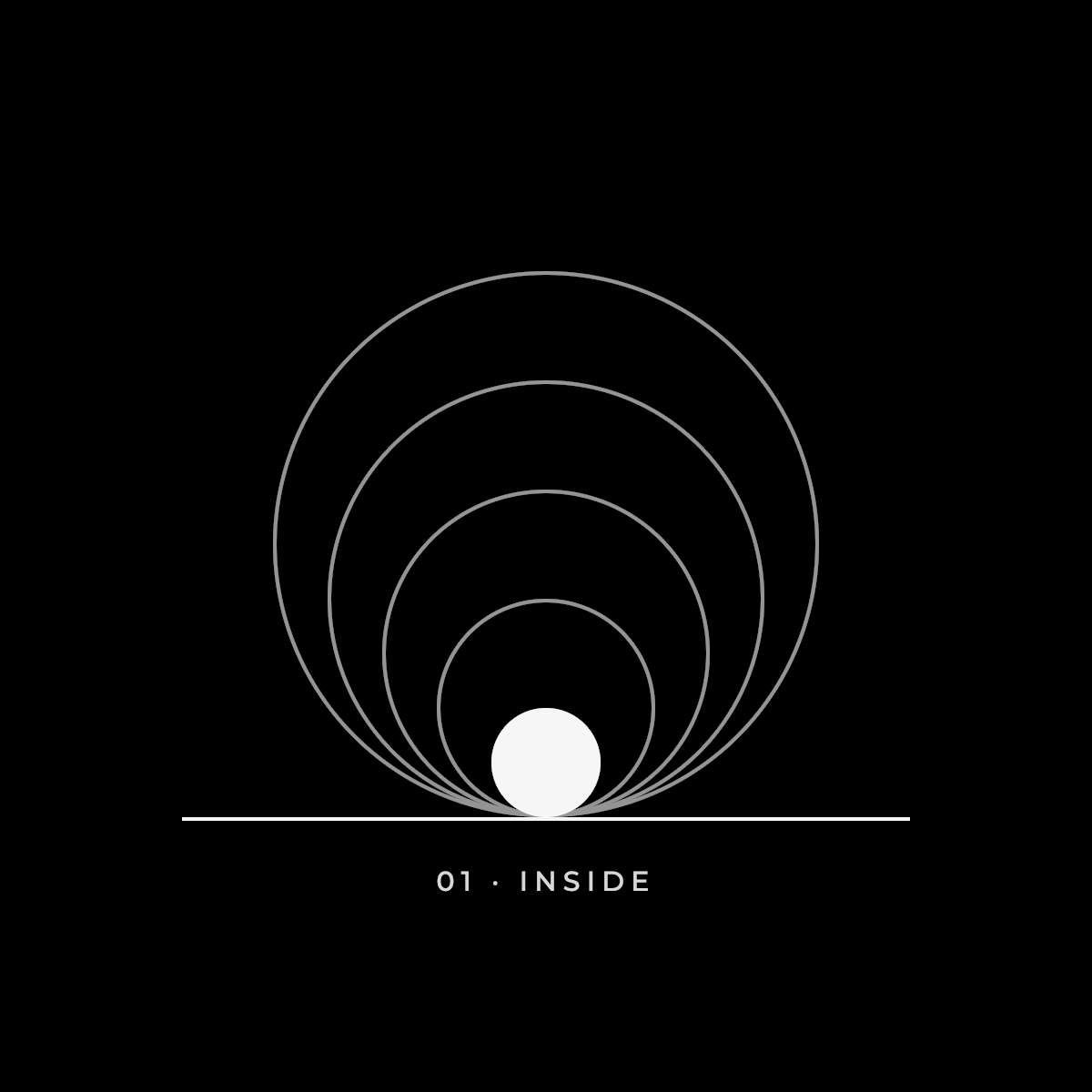
01 · Inside: Emotional Literacy
What is happening inside me?
Naming what you feel, precisely. Not just "stressed," but frustrated, disappointed, or anxious about something specific. You can't read a room if you can't read yourself.
Why now: AI can spot the emotion in an email, but it can't tell you what you're feeling. With a tool ready to smooth every message, it's easy to skip that step and send a polished reply to a feeling you never named.
How strong is the evidence? Strong, and still growing. People who can name their emotions precisely handle stress better and make steadier decisions (Lisa Feldman Barrett's research). School programs that teach emotion skills, like Yale's RULER, have shown results in controlled trials. How quickly adults can build the skill is still being studied.
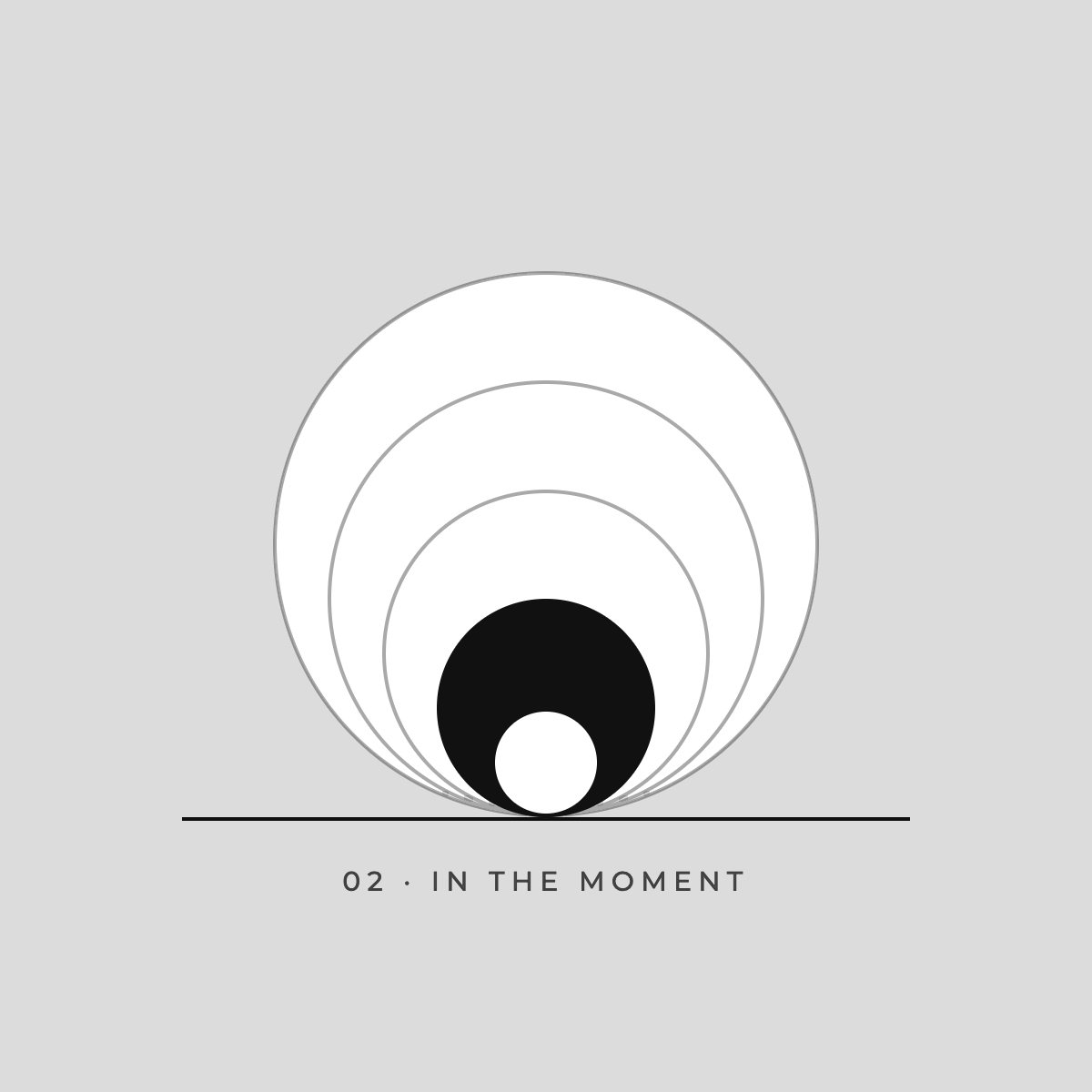
02 · In the moment: Self-Location
Am I open or closed right now?
Catching yourself in the middle of a hard moment: are you curious and open, or closed and defensive? It's the pause between feeling triggered and reacting.
Why now: AI answers in seconds, which shrinks the pause between feeling triggered and reacting. When a reply is one click away, noticing whether you're open or defensive is the part no tool can do for you.
How strong is the evidence? Grounded in practice, backed by related research. The "above or below the line" model comes from coaching and leadership practice, not lab studies. But the skill underneath it is well studied. Reframing a situation in the moment works, even in real conflict, and one study (Halperin and colleagues) found the effects lasted for months.
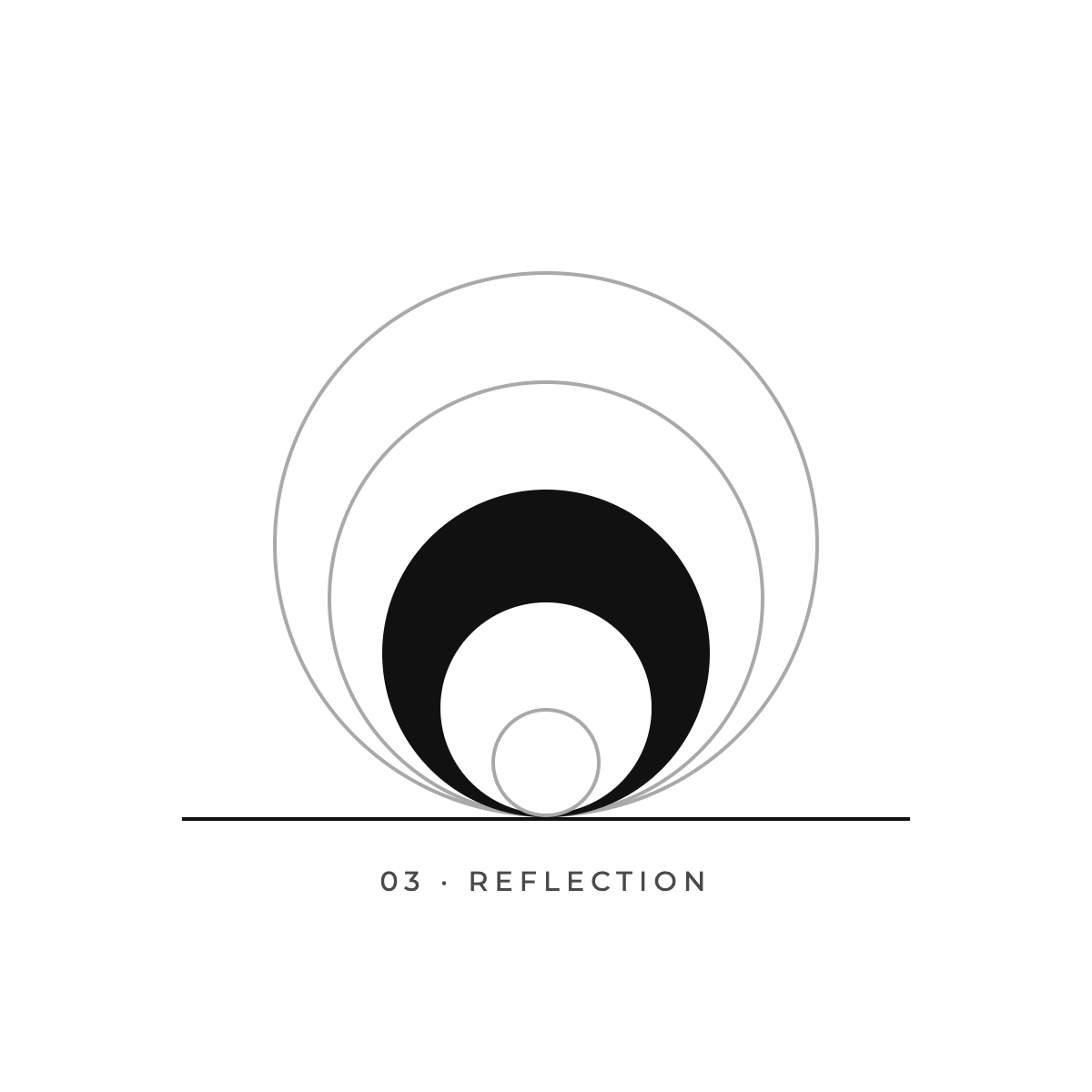
03 · Reflection: Mirror Work
What perspective am I bringing in?
Turning your attention from the problem to yourself: the assumptions, history and needs you carry into a situation. When a meeting goes badly, it's asking "what did I bring into that room?" before deciding what went wrong.
Why now: AI tools tend to work inside the story you give them. Ask why a project went wrong, and they'll build on your version of events. Seeing your own part means stepping outside that story, and a tool built to be helpful to you rarely asks you to.
How strong is the evidence? A long, respected tradition, with one caution. Reflection has been central to how people learn from experience for a century, from Dewey to Kolb. The caution: reflection helps only when it leads to insight. Going over painful thoughts without getting anywhere can make things worse, so every practice here moves toward clarity and a next step.
04 · The other person: Empathic Listening
Am I truly hearing others?
Listening to understand, not to reply. Hearing what someone means, and what they're not saying.
Why now: AI can summarize what was said in a meeting. It can't notice who went quiet, or hear what someone didn't say. As more of our communication passes through summaries, real listening gets rarer and more valuable.
How strong is the evidence? Very strong. Carl Rogers described this kind of listening in the 1950s. Recent experiments by Guy Itzchakov and Avi Kluger show that being truly listened to makes people less defensive, clearer in their thinking, and more open to other views.
05 · Together: Team Presence
What are we creating together?
Helping a group become a place where people can say the hard thing, admit mistakes, and be heard.
Why now: When everyone can work alone with a tool that never disagrees, teams drift into people working side by side with their AI instead of with each other. Someone has to create the room where people still think out loud, disagree, and say the hard thing.
How strong is the evidence? Very strong. Amy Edmondson's research on psychological safety and Google's own study of its teams found that how a team treats each other matters more than who's on it. Another study found that groups where everyone gets a turn to speak do better than groups of individually brilliant people.

Why honesty Is Important?
Since generative AI became available to everyone, the internet has filled with courses, guides and playbooks produced in an afternoon and sold with the promise of overnight success. Much of it sounds the same. Much of it leaves people more anxious than when they started, and less sure what to trust.
This work is slower on purpose. It comes from thirty years of teaching and facilitating with real people in hard places, and from research I've read closely enough to know where it's strong and where it's still early. I'll show you which parts rest on solid research and which rest on years of practice, so you can weigh them yourself. Deciding for yourself what to trust is one of the most important human skills today.
Further reading
Most programs in this space present everything as equally proven. I'd rather you know which parts are solid ground and which are well-tested practice, so you can decide what to trust.
.Emotional Literacy
Start here: Lisa Feldman Barrett, How Emotions Are Made (2017)
Claude Steiner, Achieving Emotional Literacy (1997)
Research: Kashdan, Barrett & McKnight, "Unpacking emotion differentiation," Current Directions in Psychological Science (2015)
Research: Rivers, Brackett et al., RULER classroom trial, Prevention Science (2013)
.Self-Location
Start here: Tasha Eurich, Insight (2017), or "What Self-Awareness Really Is (and How to Cultivate It)," Harvard Business Review (2018)
Dethmer, Chapman & Klemp, The 15 Commitments of Conscious Leadership (2014)
William Ury, Getting Past No (1991)
Chris Argyris, "Teaching Smart People How to Learn," Harvard Business Review (1991)
Research: Halperin, Porat, Tamir & Gross, “Can Emotion Regulation Change Political Attitudes in Intractable Conflicts? From the Laboratory to the Field.” Psychological Science (2013)
Mirror Work
Start here: Shawn Ginwright, The Four Pivots (2022)
Donald Schön, The Reflective Practitioner (1983)
David Kolb, Experiential Learning (1984)
Research: Grant, Franklin & Langford, Self-Reflection and Insight Scale, Social Behavior and Personality (2002)
.Empathic Listening
Start here: Carl Rogers & Richard Farson, Active Listening (1957)
Research: Kluger & Itzchakov, "The Power of Listening at Work," Annual Review of Organizational Psychology and Organizational Behavior (2022)
Team Presence
Start here: Amy Edmondson, The Fearless Organization (2018)
Charles Duhigg, "What Google Learned From Its Quest to Build the Perfect Team," The New York Times Magazine (2016)
Research: Edmondson, Administrative Science Quarterly (1999)
Research: Woolley et al., "Evidence for a Collective Intelligence Factor," Science (2010)
A full evidence review is in preparation for publication. Sign up for the newsletter to hear when it's out.